
Retatrutide Explained: The Multi-Receptor Agonist in Research
Introduction to Retatrutide Research
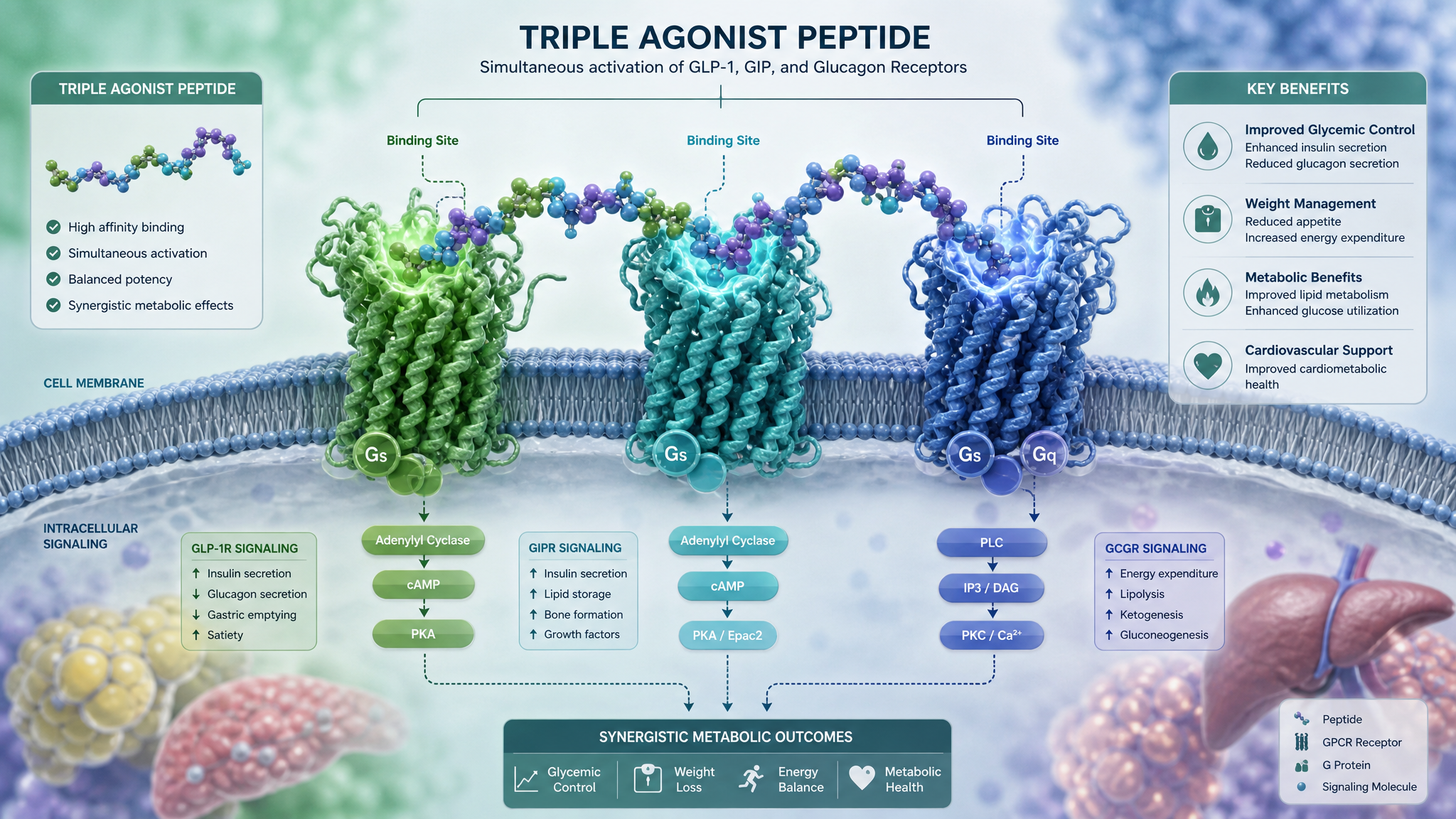
Retatrutide (LY3437943) represents a significant advancement in incretin-based research, functioning as a once-weekly triple-hormone-receptor agonist that simultaneously targets three key metabolic receptors: glucagon-like peptide-1 (GLP-1), glucose-dependent insulinotropic polypeptide (GIP), and glucagon (GCG) receptors. Developed by Eli Lilly, retatrutide has emerged from Phase 2 clinical trials with some of the most compelling metabolic data observed in this class of compounds.
For researchers studying metabolic pathways, obesity biology, and hepatic lipid metabolism, retatrutide offers a unique research tool that goes beyond the dual-agonist mechanisms of tirzepatide. Peptides HQ supplies Reta 10, Reta 20, and Reta 30 as research-grade retatrutide formulations for qualified laboratory use.
This guide provides a comprehensive overview of retatrutide's mechanisms, clinical trial data, comparison with related compounds, and research protocols. For foundational context on research peptides, see our Understanding Research Peptides guide.
Mechanism of Action: Triple Receptor Agonism
Retatrutide's defining characteristic is its simultaneous agonism of three distinct hormone receptors, each contributing unique metabolic effects.
GLP-1 Receptor Agonism
The glucagon-like peptide-1 (GLP-1) receptor component drives appetite suppression through central nervous system pathways, particularly in the hypothalamus and brainstem. GLP-1 receptor activation also enhances glucose-dependent insulin secretion, slows gastric emptying, and reduces hepatic glucose output. These effects are well-characterized from the extensive research on GLP-1 receptor agonists such as semaglutide and liraglutide.
GIP Receptor Agonism
Glucose-dependent insulinotropic polypeptide (GIP) receptor agonism contributes to the metabolic effects through several mechanisms. GIP enhances insulin secretion in a glucose-dependent manner, promotes adipocyte lipid storage and metabolism, and may have direct effects on energy expenditure. Interestingly, while GIP receptor agonism was initially thought to be counterproductive in obesity research (due to GIP's role in fat storage), the combination with GLP-1 agonism appears to produce synergistic metabolic benefits, as demonstrated by tirzepatide's clinical success.
Glucagon Receptor Agonism
The glucagon receptor component is what distinguishes retatrutide from dual GIP/GLP-1 agonists. Glucagon receptor activation increases hepatic glucose production and promotes lipolysis and fatty acid oxidation. In the context of triple agonism, the glucagon component is thought to drive increased energy expenditure and enhanced hepatic fat oxidation — effects that may explain retatrutide's superior efficacy in reducing liver fat compared to dual agonists. The glucagon component also appears to contribute to the greater overall weight reduction observed with retatrutide.
Molecular Structure and Pharmacokinetics
Retatrutide is a 36-amino acid peptide with a C18 fatty diacid moiety attached via a linker, enabling albumin binding and extending its half-life to approximately 6 days, supporting once-weekly dosing. The peptide is designed to activate all three receptors with balanced potency, avoiding the excessive glucagon activity that would cause hyperglycemia while still achieving meaningful energy expenditure effects.
Research Applications
Retatrutide's triple-receptor mechanism makes it a valuable research tool for investigating:
- Obesity and Energy Homeostasis: Studying the relative contributions of GLP-1, GIP, and glucagon pathways to body weight regulation
- Hepatic Lipid Metabolism: Investigating mechanisms of hepatic steatosis reduction and MASLD/NASH research
- Metabolic Syndrome Research: Examining effects on insulin resistance, dyslipidemia, and cardiovascular risk factors
- Incretin Biology: Understanding receptor cross-talk and synergistic signaling between GLP-1, GIP, and glucagon pathways
- Comparative Pharmacology: Benchmarking against single and dual agonists to isolate receptor-specific contributions
- Musculoskeletal Research: Phase 3 trials are investigating effects on knee osteoarthritis, suggesting potential research applications in joint biology
Clinical Trial Data: Phase 2 Findings
Retatrutide has generated substantial clinical data from its Phase 2 program, providing researchers with a rich dataset for understanding triple receptor agonism in humans.
TRIUMPH Phase 2 Weight Loss Trial
A pivotal Phase 2 trial published in the New England Journal of Medicine enrolled adults with obesity or overweight (BMI ≥27 kg/m²) without type 2 diabetes. Key findings at 48 weeks:
- 12 mg dose group: mean weight reduction of 24.2% from baseline
- Placebo group: mean weight reduction of 2.1%
- Dose-dependent weight loss observed across 1 mg, 4 mg, 8 mg, and 12 mg doses
- Approximately 26% of participants in the 12 mg group achieved ≥30% weight loss
- Weight loss continued to progress at 48 weeks without apparent plateau, suggesting further reductions may occur with longer treatment
Hepatic Steatosis Sub-Study
An associated sub-study focused on participants with metabolic dysfunction-associated steatotic liver disease (MASLD) produced particularly striking findings:
- Retatrutide induced a relative reduction in liver fat of over 80% at 48 weeks
- Up to 93% of participants in the highest dose group achieved normal liver fat levels (<5%) by 48 weeks
- These results substantially exceed those reported for GLP-1 or dual GIP/GLP-1 agonists in comparable studies
- The superior hepatic effects are hypothesized to result from the glucagon receptor component driving hepatic fatty acid oxidation
Type 2 Diabetes Phase 2 Trial
A separate Phase 2 trial in patients with type 2 diabetes demonstrated significant HbA1c reductions alongside weight loss, with a favorable safety profile consistent with the obesity trial. The glucose-lowering effects were dose-dependent and comparable to or exceeding those of approved GLP-1 receptor agonists.
Safety Profile
The safety profile of retatrutide is generally consistent with other incretin-based therapies:
- Most common adverse events: nausea, vomiting, diarrhea, constipation (dose-related and predominantly early in treatment)
- Dose-dependent increases in heart rate observed, peaking at approximately 24 weeks before declining
- No significant increase in hypoglycemia risk in non-diabetic participants
- Injection site reactions were mild and infrequent
- Retatrutide is currently in Phase 3 trials (TRIUMPH program) evaluating long-term safety across obesity, cardiovascular disease, and knee osteoarthritis indications
Comparison with Other Incretin Mimetics
| Compound | Receptor Targets | Dosing Frequency | Peak Weight Loss (Clinical) | Approval Status |
|---|---|---|---|---|
| Retatrutide | GLP-1 + GIP + Glucagon | Once weekly | ~24.2% (48 wks, Phase 2) | Phase 3 (investigational) |
| Tirzepatide (Mounjaro/Zepbound) | GLP-1 + GIP | Once weekly | ~22.5% (72 wks, Phase 3) | FDA approved (T2D, obesity) |
| Semaglutide (Ozempic/Wegovy) | GLP-1 | Once weekly | ~14.9% (68 wks, Phase 3) | FDA approved (T2D, obesity) |
| Liraglutide (Victoza/Saxenda) | GLP-1 | Once daily | ~8% (56 wks, Phase 3) | FDA approved (T2D, obesity) |
| Cagrilintide + Semaglutide | GLP-1 + Amylin | Once weekly | ~22.7% (68 wks, Phase 3) | Phase 3 (investigational) |
Laboratory Research Protocols
The following protocols are based on published research methodologies for incretin receptor agonist research.
Receptor Binding Assays
- Competitive radioligand binding assays using GLP-1R, GIPR, and GcgR-expressing cell lines
- Standard concentrations for IC50 determination: 0.001 nM to 10 μM serial dilutions
- Functional cAMP accumulation assays to confirm receptor activation
- β-arrestin recruitment assays for biased agonism characterization
Cell-Based Metabolic Research
- Insulin secretion assays in pancreatic β-cell lines (MIN6, INS-1) or primary islets
- Hepatocyte lipid accumulation models using oleic acid loading
- Adipocyte differentiation and lipolysis assays
- Glucose uptake assays in skeletal muscle cell lines
Reconstitution and Handling
- Reconstitute lyophilized retatrutide with sterile water or PBS (pH 7.4)
- Typical stock concentration: 1 mg/mL; dilute to working concentrations in assay buffer
- Sterile filter (0.22 μm) before cell culture use
- Avoid repeated freeze-thaw cycles; aliquot for single use
Storage and Handling Requirements
- Lyophilized powder: Store at -20°C; stable for up to 24 months when properly stored
- Reconstituted solution: Store at 4°C; use within 28 days; do not freeze reconstituted solution
- Temperature sensitivity: Avoid temperatures above 30°C; do not expose to direct sunlight
- pH stability: Most stable at pH 6.5–7.5; avoid extreme pH conditions
- Protein binding: The fatty acid moiety promotes albumin binding; use low-protein-binding tubes and pipette tips for accurate dosing in research
- Documentation: Maintain chain of custody records and certificate of analysis for all research-grade materials
Retatrutide in the Context of MASLD and Liver Research
One of the most compelling aspects of retatrutide's research profile is its exceptional efficacy in reducing hepatic steatosis. Metabolic dysfunction-associated steatotic liver disease (MASLD, formerly NAFLD) affects approximately 25% of the global population and represents a major unmet medical need. Retatrutide's triple-receptor mechanism appears to address hepatic fat accumulation through multiple complementary pathways.
Mechanisms of Hepatic Fat Reduction
The glucagon receptor component of retatrutide is believed to be the primary driver of its superior hepatic effects compared to dual GIP/GLP-1 agonists. Glucagon receptor activation in hepatocytes promotes:
- Increased fatty acid oxidation through upregulation of CPT1 (carnitine palmitoyltransferase 1) and other mitochondrial oxidation enzymes
- Reduced de novo lipogenesis through downregulation of SREBP-1c and its target genes
- Enhanced VLDL secretion, reducing hepatic triglyceride accumulation
- Activation of AMPK, which promotes fatty acid oxidation and inhibits lipid synthesis
Phase 2 MASLD Sub-Study Findings
The MASLD sub-study produced results that substantially exceeded expectations based on prior GLP-1 agonist data:
- Mean relative reduction in liver fat content: >80% at 48 weeks (measured by MRI-PDFF)
- 93% of participants in the 12 mg group achieved normal liver fat (<5%) by 48 weeks
- Significant improvements in liver stiffness (measured by MRE), suggesting reduction in fibrosis
- These results compare favorably to semaglutide (~30-40% relative liver fat reduction) and tirzepatide (~50-60% relative reduction) in comparable studies
Research Design Considerations for Incretin Studies
Designing rigorous research studies with retatrutide and related incretin compounds requires careful attention to several methodological considerations.
Receptor Selectivity Controls
- Selective GLP-1R antagonist (exendin 9-39) to block GLP-1 component
- Selective GIPR antagonist to block GIP component
- Selective glucagon receptor antagonist to block glucagon component
- Comparison arms with selective single-receptor agonists
- Dual agonist comparison arm (tirzepatide) to isolate glucagon receptor contribution
Metabolic Endpoint Selection
- Body weight and composition (lean mass, fat mass by DEXA or MRI)
- Glucose homeostasis (fasting glucose, insulin, HOMA-IR, glucose tolerance test)
- Lipid profile (total cholesterol, LDL, HDL, triglycerides)
- Hepatic endpoints (liver weight, liver fat by MRI-PDFF or histology, liver enzymes)
- Energy expenditure (indirect calorimetry)
- Hormone levels (GLP-1, GIP, glucagon, insulin, leptin, adiponectin)
Retatrutide and Musculoskeletal Research
An emerging area of retatrutide research involves its potential effects on musculoskeletal health. The Phase 3 TRIUMPH program includes a dedicated trial investigating retatrutide in knee osteoarthritis, reflecting preclinical and early clinical signals suggesting benefits beyond metabolic effects.
Proposed Mechanisms in Joint Biology
- Weight reduction: Reduced mechanical loading on joints through body weight reduction
- Direct GLP-1R effects: GLP-1 receptors are expressed in chondrocytes and synovial tissue
- Glucagon receptor effects: Glucagon receptors are expressed in bone and cartilage
- Systemic anti-inflammatory effects: Reduction in systemic inflammation (CRP, IL-6) may benefit joint health
- Metabolic improvements: Improved insulin sensitivity may benefit joint tissue through reduced AGE formation
Frequently Asked Questions
What makes retatrutide different from tirzepatide in research?
The key difference is the addition of glucagon receptor agonism. While tirzepatide targets GLP-1 and GIP receptors, retatrutide adds glucagon receptor activation, which drives increased hepatic fatty acid oxidation and energy expenditure. This additional mechanism appears to explain retatrutide's superior efficacy in reducing liver fat and achieving greater overall weight loss in Phase 2 trials. For researchers, this makes retatrutide a valuable tool for isolating the specific contribution of glucagon receptor signaling to metabolic outcomes.
What is the current regulatory status of retatrutide?
As of 2025-2026, retatrutide is not FDA-approved and remains an investigational compound in Phase 3 clinical trials under the TRIUMPH program. It is being evaluated for obesity, type 2 diabetes, cardiovascular disease, and knee osteoarthritis. It is available as a research chemical for laboratory research purposes only.
How does the glucagon component affect insulin sensitivity in research models?
This is an active area of investigation. Glucagon receptor activation typically increases hepatic glucose production, which could theoretically worsen insulin resistance. However, in the context of triple agonism, the GLP-1 and GIP components appear to counterbalance this effect, while the glucagon-driven increase in energy expenditure and hepatic fat oxidation may actually improve insulin sensitivity over time. Phase 2 data showed improved insulin sensitivity metrics despite glucagon receptor activation.
What cell lines are most appropriate for retatrutide receptor research?
For GLP-1R studies: NCI-H716 cells or HEK293 cells stably expressing human GLP-1R. For GIPR studies: HEK293-GIPR stable lines. For GcgR studies: HEK293-GcgR stable lines or primary hepatocytes. For integrated metabolic studies: primary human islets, HepG2 hepatocytes, or 3T3-L1 adipocytes are commonly used.
What are the key pharmacokinetic parameters of retatrutide?
Retatrutide has a half-life of approximately 6 days, supporting once-weekly dosing. The C18 fatty diacid moiety enables albumin binding, which extends its half-life compared to native peptide hormones. Peak plasma concentrations (Tmax) occur approximately 24–48 hours after subcutaneous injection. Steady-state concentrations are achieved after approximately 4 weeks of weekly dosing.
How does retatrutide's heart rate effect compare to other GLP-1 agonists?
Phase 2 data showed dose-dependent increases in heart rate with retatrutide, peaking at approximately 24 weeks before declining. The magnitude of heart rate increase was somewhat greater than that observed with semaglutide or tirzepatide, likely due to the glucagon receptor component. This is an important safety parameter being monitored in Phase 3 trials.
What storage conditions are critical for maintaining retatrutide research integrity?
The fatty acid moiety that enables albumin binding also makes retatrutide susceptible to aggregation at elevated temperatures. Maintain cold chain throughout storage and handling. The reconstituted peptide should not be frozen, as this can disrupt the fatty acid-albumin interaction and alter pharmacokinetic properties. Use low-protein-binding labware to minimize adsorption losses.
For information on research safety protocols, see our Peptide Research Safety: Best Practices guide. To explore the broader landscape of peptide research, visit our article on The Future of Peptide Research in South Africa.
About Peptides HQ
Peptides HQ is South Africa's leading supplier of research-grade peptides. All products are for research purposes only and are not intended for human consumption. Browse our peptide catalog →