
Peptide Research Safety: Best Practices for Laboratory Handling
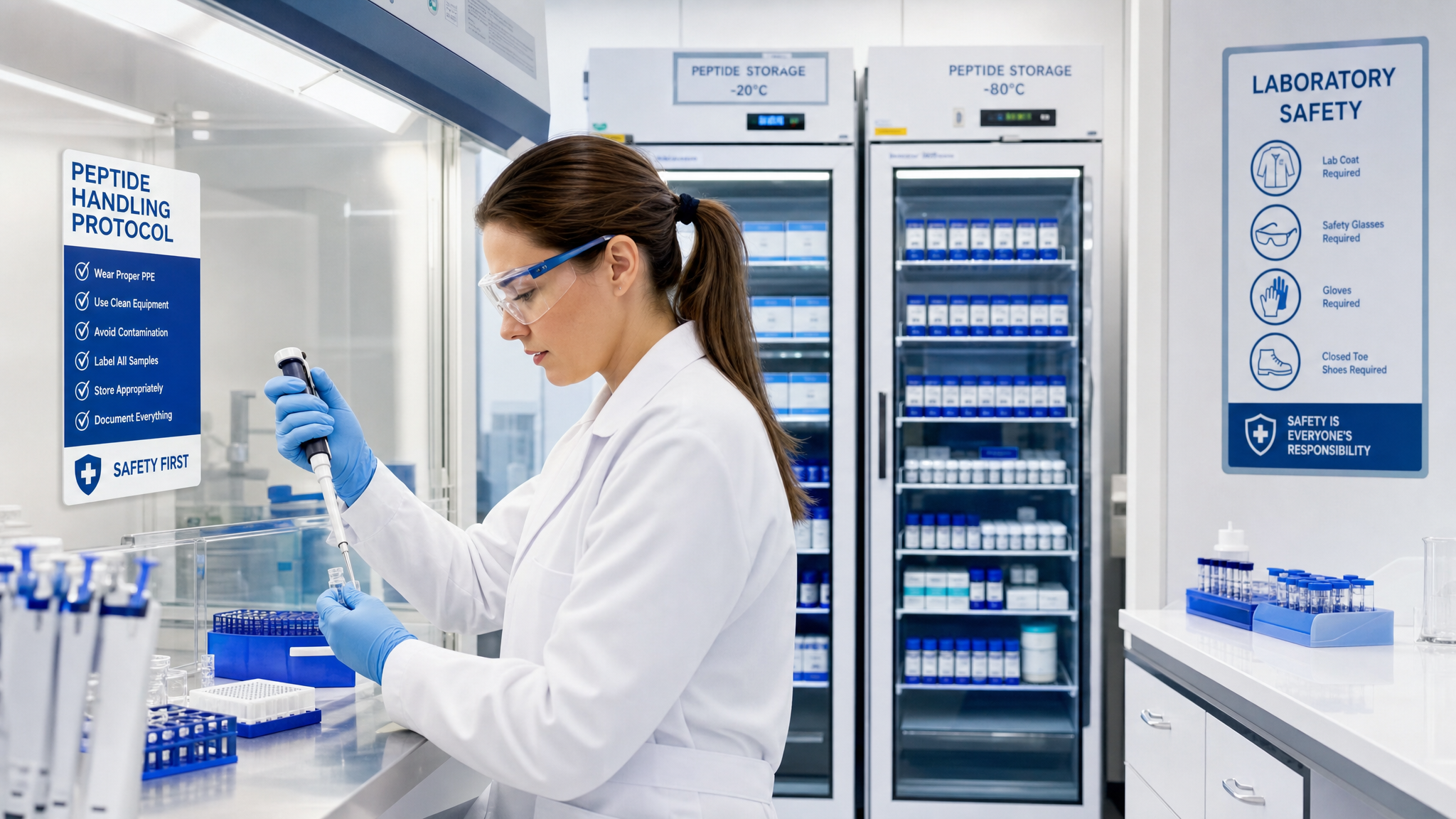
Why Laboratory Safety Matters in Peptide Research
Working with research peptides requires the same rigorous safety approach as any serious laboratory work. While peptides themselves are generally well-tolerated compounds with low toxicity profiles, the principles of good laboratory practice (GLP) exist to protect both the researcher and the integrity of the research itself.
In South Africa, laboratory safety standards are governed by the Occupational Health and Safety Act (OHSA) and institutional biosafety committees. Whether you're working at a university lab in Johannesburg, a private research facility in Cape Town, or a biotechnology company in Pretoria, the principles of safe peptide handling remain constant.
This comprehensive guide covers everything you need to know about handling research peptides safely and effectively in a South African laboratory setting.
Personal Protective Equipment (PPE)
The first line of defence in any laboratory setting is appropriate PPE. When working with research peptides, the following equipment should be considered standard:
Essential PPE Checklist
| Equipment | Purpose | Specification |
|---|---|---|
| Nitrile gloves | Skin protection, prevent contamination | Powder-free, examination grade |
| Laboratory coat | Full body protection, containment | Long-sleeved, buttoned, cotton or poly-cotton blend |
| Safety glasses/goggles | Eye protection during handling | ANSI Z87.1 rated or equivalent SABS standard |
| Face mask | Respiratory protection during weighing | N95 or equivalent when handling lyophilised powders |
| Closed-toe shoes | Foot protection | Non-slip laboratory shoes recommended |
When to Use Enhanced PPE
- Weighing lyophilised peptides — Use an N95 mask and work in a fume hood to prevent inhalation of fine particles
- Large-scale reconstitution — Consider using a biosafety cabinet for work with larger quantities
- Novel or unknown compounds — Apply maximum PPE protocols until safety data is established
- Peptides with known bioactivity — Some peptides (particularly those with hormonal activity) warrant additional handling precautions
Storage Guidelines for Research Peptides
Proper storage is perhaps the single most important factor in maintaining peptide integrity and ensuring reproducible research results. Peptides are relatively fragile molecules that can degrade through oxidation, hydrolysis, and microbial contamination if not stored correctly.
Lyophilised (Freeze-Dried) Peptides
Most research peptides from suppliers like Peptides HQ arrive in lyophilised form — a freeze-dried powder that offers maximum stability. Here's how to store them properly:
- Long-term storage (months to years) — Store at -20°C in a dedicated laboratory freezer. Some sensitive peptides may benefit from -80°C storage
- Short-term storage (days to weeks) — Refrigerate at 2-8°C in a sealed container. Ensure the vial is tightly capped to prevent moisture ingress
- Avoid repeated freeze-thaw cycles — Each cycle can cause degradation. If you need to use only a portion, consider aliquoting the peptide into smaller containers upon first opening
- Protect from light — Many peptides are light-sensitive. Store in amber vials or keep in a dark location
- Keep desiccated — Moisture is the enemy of lyophilised peptides. Include a desiccant pack in the storage container
Reconstituted Peptides
Once a peptide has been reconstituted (dissolved in solution), its stability decreases significantly. Follow these guidelines:
| Storage Condition | Typical Stability | Best Practice |
|---|---|---|
| Room temperature | Hours to 1 day | Avoid — reconstitute just before use when possible |
| Refrigerated (2-8°C) | Days to 2 weeks | Suitable for ongoing experiments with frequent use |
| Frozen (-20°C) | Weeks to months | Best for aliquots not in immediate use |
| Ultra-frozen (-80°C) | Months to years | Optimal for long-term storage of reconstituted peptides |
Reconstitution Best Practices
- Use bacteriostatic water — Contains 0.9% benzyl alcohol to prevent microbial growth. This is the preferred diluent for most research peptides
- Sterile technique — Swab vial tops with alcohol before puncturing. Use sterile syringes and needles
- Gentle mixing — Never shake peptide vials vigorously. Instead, roll gently between your palms or let the diluent slide down the side of the vial
- Calculate concentration — Record the exact volume of diluent added and calculate the resulting concentration (μg/μL or mg/mL)
- Label everything — Date, compound name, concentration, and researcher initials should be on every vial
Laboratory Environment
The laboratory environment itself plays a crucial role in both safety and research quality. Here are the key environmental factors to control:
Temperature and Humidity Control
South African climates can be challenging for peptide work. Cities like Durban experience high humidity, while Johannesburg's altitude means different atmospheric pressures. Ensure your laboratory maintains:
- Ambient temperature between 18-25°C during experiments
- Relative humidity below 60% (critical for preventing moisture absorption by lyophilised peptides)
- Adequate ventilation, especially when working with volatile solvents used in reconstitution
- Clean, dust-free work surfaces
Equipment Maintenance
| Equipment | Maintenance Frequency | Key Checks |
|---|---|---|
| Freezers (-20°C, -80°C) | Weekly temperature log, annual service | Temperature consistency, defrost cycles, alarm function |
| Refrigerators | Daily temperature log, monthly clean | Temperature range, door seal integrity |
| Analytical balances | Before each use, annual calibration | Calibration weights, levelling, cleanliness |
| Pipettes | Monthly calibration check | Volume accuracy, seal integrity |
| Biosafety cabinets | Annual certification | HEPA filter integrity, airflow patterns |
Documentation and Record-Keeping
Meticulous documentation is not just good practice — it's essential for research reproducibility and compliance with institutional protocols. Every peptide-related activity should be recorded in detail.
What to Document
- Product receipt — Date received, supplier (e.g., Peptides HQ), batch/lot number, Certificate of Analysis reference
- Storage conditions — Where stored, temperature, any deviations from recommended conditions
- Reconstitution — Date, diluent used, volume added, resulting concentration, researcher performing the reconstitution
- Usage — Date used, volume withdrawn, experiment reference, any observations about the compound's appearance or behaviour
- Disposal — Date, method of disposal, volume/quantity disposed, compliance with institutional waste protocols
Sample Documentation Template
| Field | Example Entry |
|---|---|
| Compound | BPC-157 (Wolverine 20mg blend) |
| Supplier | Peptides HQ, South Africa |
| Batch Number | PHQ-BPC-2024-0047 |
| Date Received | 15 March 2024 |
| Storage Location | Freezer B, Shelf 3, Position 7 |
| Reconstitution Date | 20 March 2024 |
| Diluent | Bacteriostatic water (0.9% BA) |
| Volume Added | 2.0 mL |
| Final Concentration | 10 mg/mL |
| Researcher | Dr. J. van der Merwe |
Waste Disposal and Decontamination
Proper disposal of peptide research materials is both a safety and environmental responsibility. In South Africa, laboratory waste disposal must comply with the National Environmental Management: Waste Act and institutional guidelines.
Disposal Guidelines
- Unused lyophilised peptide — Can typically be disposed of as chemical waste through your institution's approved waste contractor
- Reconstituted peptide solutions — Dilute solutions can often be neutralised and disposed of via the chemical waste stream. Consult your safety officer
- Sharps (needles, broken vials) — Must be placed in approved sharps containers and disposed of through medical waste channels
- Contaminated consumables — Gloves, bench paper, and other materials should go into chemical waste bins
Emergency Procedures
Spillage Protocol
- Alert nearby colleagues to the spill
- Don appropriate PPE before approaching
- Contain the spill with absorbent material (paper towels or spill kit)
- Clean the area with appropriate decontamination solution (70% ethanol for most peptide spills)
- Dispose of contaminated materials in chemical waste
- Document the incident in your laboratory's safety log
Accidental Exposure
- Skin contact — Remove contaminated clothing, wash the affected area thoroughly with soap and water for at least 15 minutes
- Eye contact — Flush eyes with clean water or eyewash solution for at least 15 minutes. Seek medical attention
- Inhalation — Move to fresh air. If symptoms persist, seek medical attention
- Ingestion — Do not induce vomiting. Seek immediate medical attention
Always report exposure incidents to your institution's health and safety officer and document them in the laboratory safety register.
Regulatory Compliance in South Africa
South African researchers must comply with several regulatory frameworks when working with research peptides:
- Occupational Health and Safety Act (OHSA) — Governs general workplace safety, including laboratory environments
- Institutional Biosafety Committees — Most universities and research institutions have their own biosafety protocols that must be followed
- South African Health Products Regulatory Authority (SAHPRA) — While research peptides are not scheduled substances for research use, be aware of any regulatory changes that may affect your work
- National Environmental Management: Waste Act — Governs the disposal of laboratory waste, including chemical waste from peptide research
Frequently Asked Questions
Do I need special training to handle research peptides?
While research peptides don't typically require specialised hazmat training, basic laboratory safety training is essential. Most South African institutions require completion of a general laboratory safety course before commencing bench work. Additional training in aseptic technique is recommended for peptide reconstitution.
Can peptides be stored at room temperature?
Lyophilised peptides can withstand brief periods at room temperature (e.g., during shipping or while weighing), but they should always be returned to cold storage as soon as possible. Never store reconstituted peptides at room temperature for extended periods.
How do I know if my peptide has degraded?
Signs of degradation may include changes in colour, formation of precipitates in reconstituted solutions, unusual odour, or inconsistent experimental results. If you suspect degradation, do not use the peptide — source fresh material from a reliable supplier like Peptides HQ.
What solvent should I use for reconstitution?
Bacteriostatic water is the most common and recommended diluent for most research peptides. Some peptides may require specific solvents — always check the product documentation or consult with your supplier for guidance.
Is it safe to combine different peptides in one solution?
This depends on the specific peptides involved. Some peptides are compatible when combined, while others may interact or degrade. As a general rule, keep different peptides in separate solutions unless published research supports their combination for your specific application.
Disclaimer: This guide is intended for informational purposes related to research laboratory practices. All products sold by Peptides HQ are intended strictly for research purposes only. They are not intended for human consumption. Always follow your institution's specific safety protocols and guidelines.
About Peptides HQ
Peptides HQ is South Africa's leading supplier of research-grade peptides. All products are for research purposes only and are not intended for human consumption. Browse our peptide catalog →