
Melanotan 2: Research Applications and Laboratory Protocols
Introduction to Melanotan 2 Research
Melanotan 2 (MT-II) is a cyclic synthetic analogue of alpha-melanocyte-stimulating hormone (α-MSH), developed at the University of Arizona in the 1980s as part of a research program investigating melanocortin receptor pharmacology. With the sequence Ac-Nle-cyclo[Asp-His-D-Phe-Arg-Trp-Lys]-NH2, MT-II is a non-selective melanocortin receptor agonist that activates MC1R, MC3R, MC4R, and MC5R with varying potency.
The melanocortin system is a complex neuroendocrine network involved in pigmentation, energy homeostasis, sexual function, inflammation, and immune regulation. MT-II's broad receptor activity makes it a valuable research tool for investigating these diverse physiological systems, though its non-selectivity also means that research findings must be carefully interpreted in the context of multi-receptor activation.
Peptides HQ supplies Melanotan 2 as a research-grade compound for qualified laboratory use. This guide provides a comprehensive overview of MT-II's receptor pharmacology, research applications, and laboratory protocols.
The Melanocortin Receptor System
The melanocortin system comprises five G protein-coupled receptors (MC1R–MC5R), their endogenous agonists (α-MSH, β-MSH, γ-MSH, ACTH), and two endogenous antagonists (agouti protein and agouti-related protein, AgRP). Understanding this system is essential for interpreting MT-II research data.
MC1R (Melanocortin-1 Receptor)
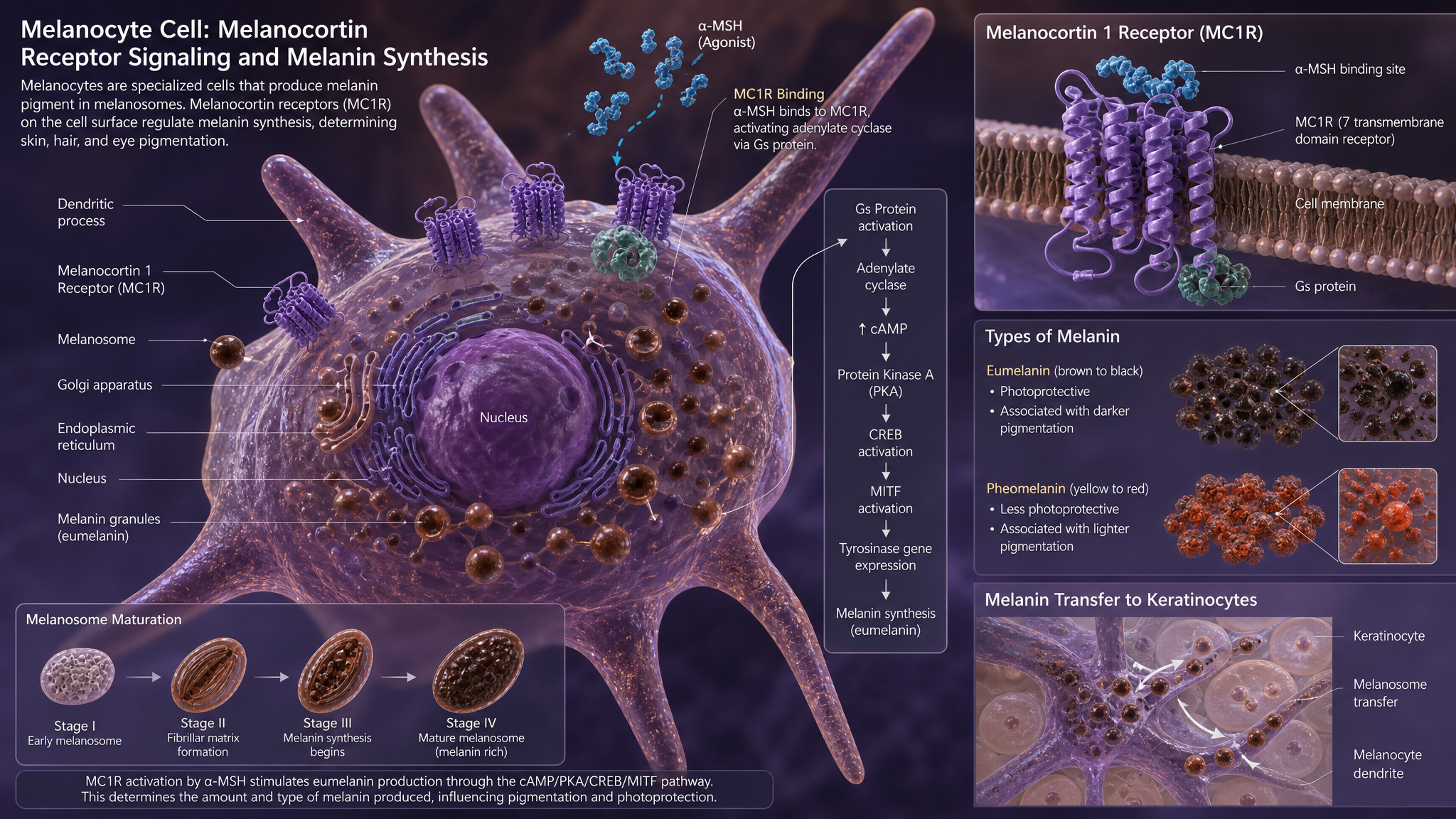
MC1R is primarily expressed on melanocytes and is the key regulator of melanogenesis. MC1R activation by α-MSH or MT-II stimulates the production of eumelanin (brown/black pigment) over phaeomelanin (red/yellow pigment) through upregulation of tyrosinase and other melanogenic enzymes via the cAMP-PKA-MITF signaling cascade. MC1R variants are strongly associated with red hair, fair skin, and increased melanoma risk in humans.
MC3R (Melanocortin-3 Receptor)
MC3R is expressed in the hypothalamus, limbic system, and peripheral tissues. It plays a role in energy homeostasis, particularly in regulating energy intake and expenditure. MC3R knockout mice develop obesity with increased fat mass despite normal food intake, suggesting a role in metabolic efficiency. MT-II's activity at MC3R contributes to its appetite-suppressing effects in research models.
MC4R (Melanocortin-4 Receptor)
MC4R is the most extensively studied melanocortin receptor in the context of energy homeostasis. Expressed predominantly in the hypothalamus, MC4R activation suppresses appetite and increases energy expenditure. MC4R mutations are the most common monogenic cause of human obesity, affecting approximately 1-6% of severely obese individuals. MT-II's potent MC4R agonism is responsible for its strong appetite-suppressing effects in animal models.
MC5R (Melanocortin-5 Receptor)
MC5R is widely expressed in exocrine glands, including sebaceous glands, lacrimal glands, and Harderian glands. It regulates exocrine gland secretion and has been implicated in immune function. MT-II's activity at MC5R may contribute to some of its peripheral effects observed in research models.
Mechanism of Action
Melanogenesis Pathway
MT-II activates MC1R on melanocytes, triggering the cAMP-PKA signaling cascade. This leads to phosphorylation and activation of CREB (cAMP response element-binding protein), which upregulates MITF (microphthalmia-associated transcription factor) — the master regulator of melanocyte differentiation and melanogenesis. MITF then drives expression of tyrosinase, TRP-1, and TRP-2, the key enzymes in the melanin synthesis pathway. The net result is increased eumelanin production and darker pigmentation.
Central Appetite Regulation
MT-II's appetite-suppressing effects are primarily mediated through MC4R activation in the hypothalamic arcuate nucleus and paraventricular nucleus. MC4R activation inhibits the orexigenic (appetite-stimulating) effects of neuropeptide Y (NPY) and agouti-related protein (AgRP), while enhancing the anorexigenic effects of pro-opiomelanocortin (POMC) neurons. This central mechanism produces robust appetite suppression in animal models.
Cyclic Structure and Receptor Selectivity
The cyclic structure of MT-II (formed by a lactam bridge between Asp and Lys) confers greater metabolic stability compared to linear α-MSH analogues, with a longer half-life and enhanced receptor binding. However, this cyclization also reduces receptor selectivity compared to linear analogues, resulting in MT-II's broad activation of MC1R, MC3R, MC4R, and MC5R.
Research Applications
- Pigmentation Biology: Investigating melanogenesis mechanisms, melanocyte biology, and photoprotection
- Obesity and Energy Homeostasis: Studying MC3R/MC4R-mediated appetite regulation and energy expenditure
- Melanocortin Receptor Pharmacology: Characterizing receptor binding, signaling, and functional responses
- Photoprotection Research: Investigating UV-protective mechanisms of eumelanin
- Inflammatory Research: Exploring melanocortin system's anti-inflammatory effects
- Comparative Pharmacology: Benchmarking against selective MC1R agonists (afamelanotide) and MC4R agonists
- Drug Discovery: Using MT-II as a reference compound for developing selective melanocortin receptor ligands
Published Research Findings
Pigmentation Studies
The original University of Arizona research program demonstrated that MT-II produced dose-dependent increases in skin pigmentation in animal models and early human studies. Subsequent research has characterized the molecular mechanisms in detail, showing that MC1R activation by MT-II produces a shift from phaeomelanin to eumelanin synthesis, with the eumelanin providing superior UV protection compared to phaeomelanin.
Appetite Regulation Research
Animal studies have consistently demonstrated that MT-II administration produces significant reductions in food intake and body weight in rodent models of obesity. The mechanism involves both acute appetite suppression (within hours of administration) and longer-term effects on energy homeostasis. Studies using MC4R knockout mice have confirmed that the appetite-suppressing effects are primarily MC4R-mediated.
Melanoma Risk Research: The Melanoma Paradox
A significant area of research concern involves MT-II's potential relationship to melanoma risk. While MC1R activation is generally considered photoprotective, chronic non-physiological stimulation of melanocortin receptors may promote the growth of pre-existing dysplastic nevi. Multiple case reports have documented melanoma development in MT-II users, and dermatological research has raised concerns that MT-II-induced darkening of existing moles can mask the clinical warning signs (ABCDE criteria) of melanoma.
Comparison with Related Melanocortin Compounds
| Compound | Structure | Receptor Selectivity | Half-Life | Regulatory Status |
|---|---|---|---|---|
| Melanotan 2 (MT-II) | Cyclic 7 aa analogue | MC1R, MC3R, MC4R, MC5R (non-selective) | ~1–2 hours | Research chemical only; not approved |
| Afamelanotide (Melanotan I, Scenesse) | Linear 13 aa analogue | MC1R selective | ~22 hours (implant: ~70 days) | FDA approved for EPP (Scenesse) |
| α-MSH (endogenous) | Linear 13 aa peptide | MC1R, MC3R, MC4R, MC5R | <5 minutes | Endogenous hormone |
| Bremelanotide (PT-141) | Cyclic 7 aa analogue (MT-II metabolite) | MC3R, MC4R (central) | ~2.7 hours | FDA approved for HSDD (Vyleesi) |
| Setmelanotide (Imcivree) | Cyclic 8 aa analogue | MC4R selective | ~11 hours | FDA approved for genetic obesity |
Laboratory Protocols
Peptide Reconstitution Protocol
- MT-II is supplied as a lyophilized powder; handle in a laminar flow hood
- Reconstitute with bacteriostatic water (0.9% benzyl alcohol) for research use requiring multi-dose vials
- Standard research stock concentration: 1 mg/mL
- Gently swirl to dissolve; do not vortex or shake vigorously
- Allow 5–10 minutes for complete dissolution at room temperature
- Sterile filter (0.22 μm) before use in cell culture or animal studies
Cell Culture Research Protocols
- Melanocyte studies: Use primary human melanocytes or B16-F10 mouse melanoma cells; typical MT-II concentrations: 1 nM–1 μM
- cAMP assays: Measure intracellular cAMP 15–30 minutes after MT-II treatment using ELISA or HTRF assays
- Melanin quantification: Measure melanin content after 48–72 hours using spectrophotometric methods (absorbance at 405 nm after NaOH solubilization)
- Tyrosinase activity: L-DOPA oxidation assay to measure tyrosinase activation
In Vivo Research Dosing (Animal Models)
- Published rodent studies typically use doses of 0.1–1 mg/kg body weight
- Administration routes: subcutaneous injection (most common), intraperitoneal, intranasal
- For pigmentation studies: daily or twice-daily dosing for 2–4 weeks
- For appetite studies: acute single-dose or chronic dosing protocols depending on endpoint
- Include appropriate vehicle controls (bacteriostatic water) in all studies
Stability Considerations
MT-II's cyclic structure confers greater stability than linear α-MSH analogues, but proper handling remains critical:
- The cyclic lactam bridge is stable under physiological conditions but can be disrupted by strong acids or bases
- MT-II is susceptible to oxidation at the tryptophan residue; minimize exposure to oxidizing agents and UV light
- The D-Phe residue confers resistance to proteolytic degradation compared to natural α-MSH
- Reconstituted solutions should be used within 4 weeks when stored at 4°C
- Avoid repeated freeze-thaw cycles; aliquot for single use when possible
Storage and Handling Requirements
- Lyophilized powder: Store at -20°C; stable for up to 24 months; protect from moisture
- Reconstituted solution: Store at 4°C; use within 4 weeks; protect from light
- Light sensitivity: The tryptophan residue is photosensitive; store in amber vials or wrapped in foil
- Temperature: Avoid temperatures above 25°C; do not leave at room temperature for extended periods
- Contamination: Use sterile technique throughout; discard any vials showing cloudiness or particulates
- Documentation: Maintain complete records of lot numbers, storage conditions, and usage dates
Melanocortin System in Inflammation and Immune Research
Beyond pigmentation and appetite regulation, the melanocortin system plays important roles in inflammation and immune function that are increasingly recognized as research targets.
Anti-Inflammatory Mechanisms
α-MSH and its analogues including MT-II have demonstrated potent anti-inflammatory effects in multiple preclinical models. The mechanisms include:
- MC1R-mediated effects: MC1R activation on macrophages and dendritic cells reduces pro-inflammatory cytokine production (TNF-α, IL-1β, IL-6) and promotes anti-inflammatory cytokine release (IL-10)
- MC3R effects: MC3R activation modulates neutrophil migration and reduces inflammatory cell recruitment to sites of injury
- NF-κB inhibition: Melanocortin receptor activation inhibits NF-κB signaling, a master regulator of inflammatory gene expression
- Neuropeptide-mediated immunomodulation: Central melanocortin signaling modulates peripheral immune responses through neuroendocrine pathways
Research Applications in Inflammatory Models
- Arthritis models: reduced joint inflammation and cartilage damage in rodent models
- Inflammatory bowel disease models: reduced colonic inflammation and improved barrier function
- Neuroinflammation models: reduced microglial activation and neuroinflammatory markers
- Ischemia-reperfusion injury: reduced inflammatory damage in cardiac and renal models
Photoprotection Research with Melanocortin Agonists
The relationship between melanocortin receptor activation, melanogenesis, and UV protection is a significant area of research with implications for skin cancer prevention biology.
Eumelanin vs. Phaeomelanin in UV Protection
- Eumelanin absorbs UV radiation across a broader spectrum (UVA and UVB)
- Eumelanin dissipates absorbed UV energy as heat more efficiently, reducing DNA damage
- Phaeomelanin can actually generate reactive oxygen species upon UV exposure, potentially increasing oxidative DNA damage
- MC1R activation by MT-II shifts melanin production toward eumelanin, theoretically improving photoprotection
Research Considerations for Photoprotection Studies
- Measure both eumelanin and phaeomelanin content separately (HPLC-based melanin analysis)
- Quantify UV-induced DNA damage (cyclobutane pyrimidine dimers, 8-oxo-dG) as functional endpoints
- Use appropriate UV exposure protocols (UVA, UVB, or simulated solar radiation)
- Include MC1R-null cell lines or animals as controls to confirm MC1R-mediated effects
- Consider the melanoma paradox: monitor for any pro-proliferative effects on melanocytes alongside photoprotective effects
Frequently Asked Questions
What is the key pharmacological difference between Melanotan 2 and afamelanotide?
The fundamental difference is receptor selectivity. Afamelanotide (Melanotan I) is a linear peptide with high selectivity for MC1R, producing primarily pigmentation effects with minimal systemic side effects. MT-II is a cyclic peptide that non-selectively activates MC1R, MC3R, MC4R, and MC5R. The additional receptor activity at MC3R and MC4R produces central effects including appetite suppression, while MC5R activity affects exocrine glands. This broader receptor profile makes MT-II more useful for studying the full melanocortin system but also produces more complex pharmacological effects.
How does MT-II's cyclic structure affect its pharmacokinetics?
The cyclic lactam bridge between Asp and Lys in MT-II confers several pharmacokinetic advantages over linear α-MSH: (1) increased metabolic stability due to resistance to exopeptidases; (2) longer half-life (~1-2 hours vs. <5 minutes for α-MSH); (3) enhanced receptor binding affinity due to conformational constraint; and (4) improved membrane permeability.
What controls are essential in MT-II pigmentation research?
Essential controls include: (1) vehicle control (bacteriostatic water or PBS); (2) positive control (α-MSH or a known MC1R agonist); (3) MC1R antagonist control (agouti protein or synthetic MC1R antagonist) to confirm receptor specificity; (4) UV-irradiated control group if studying photoprotection; and (5) appropriate cell line controls (MC1R-expressing vs. MC1R-null cells) for mechanistic studies.
What is the significance of the melanoma paradox in MT-II research?
The melanoma paradox refers to the observation that while MC1R activation promotes eumelanin production (which is photoprotective), chronic non-physiological melanocortin receptor stimulation may paradoxically increase melanoma risk. The proposed mechanisms include: (1) promotion of melanocyte proliferation that could accelerate growth of pre-existing dysplastic nevi; (2) masking of clinical warning signs of melanoma due to uniform darkening; and (3) potential direct mitogenic effects through MC4R signaling.
How should MT-II be handled to minimize oxidation?
The tryptophan residue in MT-II is susceptible to oxidation, which can reduce biological activity. To minimize oxidation: (1) store lyophilized powder under inert atmosphere (nitrogen or argon) if possible; (2) use amber vials or foil-wrapped containers; (3) minimize exposure to air during reconstitution; (4) add antioxidants (ascorbic acid at 0.1%) to reconstitution buffer if long-term stability is required; (5) verify peptide integrity by HPLC before use in critical experiments.
What cell lines are most appropriate for MT-II receptor research?
For MC1R research: primary human melanocytes, B16-F10 mouse melanoma cells (endogenous MC1R), or HEK293 cells stably expressing human MC1R. For MC4R research: hypothalamic cell lines (GT1-7, N2a) or HEK293-MC4R stable lines. For comparative receptor pharmacology: CHO or HEK293 cells stably expressing individual melanocortin receptors allow direct comparison of receptor-specific responses.
How does MT-II compare to setmelanotide for appetite research?
Setmelanotide (Imcivree) is a selective MC4R agonist approved for genetic obesity caused by POMC, PCSK1, or LEPR deficiency. For appetite research, setmelanotide provides cleaner MC4R-specific data without the confounding effects of MC1R (pigmentation) and MC5R (exocrine) activation. MT-II is more appropriate when studying the integrated melanocortin system response or when investigating the relative contributions of MC3R vs. MC4R to appetite regulation.
For comprehensive safety protocols applicable to all research peptides, see our Peptide Research Safety: Best Practices guide. For broader context on peptide research in South Africa, see The Future of Peptide Research in South Africa.
About Peptides HQ
Peptides HQ is South Africa's leading supplier of research-grade peptides. All products are for research purposes only and are not intended for human consumption. Browse our peptide catalog →