
Understanding Research Peptides: A Comprehensive Guide for South Africa
What Are Research Peptides?
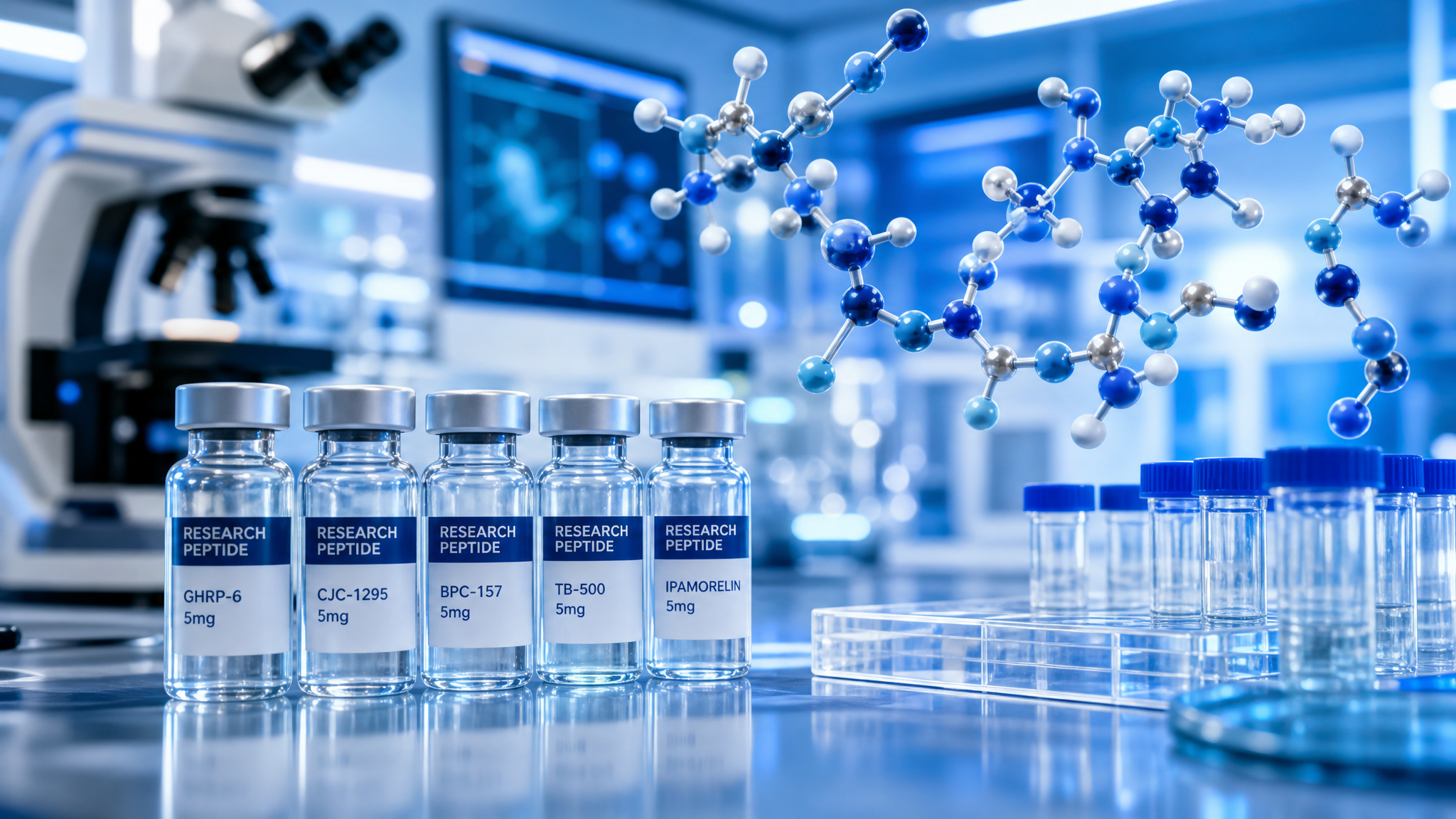
Research peptides are short chains of amino acids — typically between 2 and 50 amino acid residues — that serve as invaluable tools in modern scientific investigation. Unlike full-length proteins, these smaller molecular structures allow researchers to study specific biological pathways with remarkable precision and reproducibility.
At their core, peptides are the building blocks of life. They mediate critical functions throughout the body, from cellular communication and immune regulation to metabolic processes and tissue maintenance. By isolating and studying individual peptide sequences, scientists can unlock a deeper understanding of how these processes work — and, potentially, how they might be enhanced or corrected when they malfunction.
Why Peptides Matter in Scientific Research
The significance of peptide research cannot be overstated. Over the past two decades, peptides have moved from niche academic curiosities to central players in pharmaceutical development, diagnostic medicine, and biotechnology. Here's why they matter:
- Targeted specificity — Peptides can be engineered to interact with precise molecular targets, making them ideal for studying receptor-ligand interactions
- Low toxicity profiles — Due to their natural origins, peptides generally exhibit lower toxicity compared to synthetic small-molecule compounds
- Rapid metabolism — Their predictable metabolic breakdown makes them easier to study in controlled laboratory conditions
- Structural versatility — Peptide sequences can be modified, truncated, or combined to create novel research tools
The South African Research Landscape
South Africa has emerged as a significant hub for peptide research in the Southern Hemisphere. The country boasts a network of world-class universities, research institutes, and biotech laboratories that are advancing our understanding of peptide science in ways that have global implications.
Key Research Institutions
| Institution | Location | Key Research Focus |
|---|---|---|
| University of Cape Town | Cape Town, Western Cape | Biomedical peptide therapeutics, drug discovery |
| University of the Witwatersrand | Johannesburg, Gauteng | Molecular biology, protein engineering |
| University of Pretoria | Pretoria, Gauteng | Agricultural peptides, antimicrobial research |
| Stellenbosch University | Stellenbosch, Western Cape | Biochemistry, structural biology |
| CSIR (Council for Scientific and Industrial Research) | Pretoria, Gauteng | Industrial biotechnology, peptide applications |
| University of KwaZulu-Natal | Durban, KwaZulu-Natal | Marine peptides, natural product chemistry |
South African researchers have contributed significantly to several groundbreaking discoveries in peptide science, including novel antimicrobial peptides derived from indigenous plant species and innovative approaches to peptide-based diagnostics for tropical diseases prevalent on the African continent.
Types of Research Peptides
Research peptides can be broadly categorized into several groups based on their primary research applications. Understanding these categories helps researchers select the appropriate compounds for their specific studies.
1. Metabolic Research Compounds
These peptides are primarily studied for their roles in energy regulation, appetite signaling, and body composition research. They include compounds that interact with pathways controlling glucose metabolism, lipid processing, and energy expenditure. Notable examples include Retatrutide (Reta) and related GLP-1 pathway compounds that have become the focus of significant metabolic research worldwide.
2. Regenerative Research Compounds
Commonly referenced in tissue repair and cellular regeneration studies, these peptides — such as BPC-157 and TB-500 (Wolverine blend) — are used to investigate mechanisms of wound healing, tissue integrity, and structural repair at the cellular level. South African sports science researchers have shown particular interest in this category.
3. Growth Hormone Secretagogues
Peptides like Ipamorelin, CJC-1295, and Tesamorelin are studied for their interactions with growth hormone-releasing pathways. These compounds are valuable tools for understanding hormonal regulation and metabolic signaling cascades.
4. Cognitive and Neuroprotective Compounds
Peptides such as Semax and Selank are used in research exploring cognitive function, neuroprotection, and anxiety-related pathways. The intersection of peptide science and neuroscience is one of the most exciting frontiers in modern research.
5. Cosmetic and Dermatological Research Compounds
Compounds like GHK-Cu, SNAP-8, and the Glow formulation are studied for their roles in skin-related cellular processes, including collagen synthesis, surface signaling, and tissue remodeling.
6. Longevity and Anti-Ageing Research
Epitalon and MOTS-c represent a fascinating category of peptides studied for their involvement in telomere biology, cellular energy regulation, and age-related pathway research. This is one of the fastest-growing areas of peptide science globally.
Quality Standards: What to Look For
When sourcing research peptides, quality isn't just important — it's everything. The validity of your research results depends entirely on the purity and consistency of the compounds you use. Here's what every serious researcher should demand:
Purity Requirements
- Minimum 98% purity — Industry standard for research-grade peptides, though premium suppliers like Peptides HQ target 99%+ purity
- HPLC verification — High-Performance Liquid Chromatography should be used to verify purity levels
- Mass spectrometry confirmation — MS analysis confirms the molecular identity of the peptide
- Certificate of Analysis (CoA) — Every batch should come with a comprehensive CoA documenting identity, purity, and potency
Manufacturing Standards
| Standard | Description | Why It Matters |
|---|---|---|
| GMP Certification | Good Manufacturing Practice compliance | Ensures consistent, contamination-free production |
| Third-Party Testing | Independent laboratory verification | Eliminates manufacturer bias in quality reporting |
| Batch Tracking | Full traceability from production to delivery | Enables investigation of any quality concerns |
| Cold Chain Shipping | Temperature-controlled logistics | Preserves peptide integrity during transit |
Storage and Handling Best Practices
Proper storage is critical for maintaining peptide integrity. Here are the essential guidelines:
- Lyophilised (freeze-dried) peptides — Store at -20°C for long-term storage, or 2-8°C for short-term use. Keep away from direct light and moisture
- Reconstituted peptides — Always refrigerate at 2-8°C and use within the recommended timeframe. Use bacteriostatic water for reconstitution
- Handling — Work in clean conditions, use sterile technique, and wear appropriate laboratory protection
- Documentation — Record batch numbers, storage conditions, reconstitution dates, and any observations
Sourcing Peptides in South Africa
For South African researchers, access to quality peptides has historically been a challenge. International shipping delays, customs complications, and the lack of local quality assurance have been persistent obstacles. This is precisely why Peptides HQ was established — to provide the local research community with reliable, fast access to the highest quality compounds.
When choosing a peptide supplier in South Africa, consider these factors:
- Local presence — A South African supplier understands local regulatory frameworks and shipping logistics
- Delivery speed — Research timelines are tight; look for 2-3 day delivery capabilities
- Quality documentation — Demand CoAs with every purchase
- Product range — A comprehensive catalog suggests a serious commitment to the peptide research market
- Expert support — Look for suppliers with genuine peptide knowledge who can answer technical questions
Frequently Asked Questions
Are research peptides legal in South Africa?
Research peptides are legal to purchase and possess in South Africa for legitimate research purposes. They are classified as research chemicals and are not scheduled substances when used in a research context. However, they are not approved for human consumption or therapeutic use without appropriate clinical oversight and regulatory approval.
How should I store my peptides after delivery?
Lyophilised peptides should be stored at -20°C for long-term storage or 2-8°C for short-term use. Once reconstituted, always refrigerate and use within the recommended timeframe. Avoid repeated freeze-thaw cycles.
What is the difference between pharmaceutical-grade and research-grade peptides?
Pharmaceutical-grade peptides are manufactured under strict regulatory oversight for therapeutic use in humans. Research-grade peptides are produced to high purity standards (typically 98-99%+) for use in laboratory and scientific research settings only.
How long does delivery take within South Africa?
Peptides HQ delivers to all major South African cities within 2-3 business days. This includes Johannesburg, Cape Town, Durban, Pretoria, and all other urban centres.
Do peptides come with documentation?
Yes. All peptides from Peptides HQ come with a Certificate of Analysis (CoA) documenting the identity, purity, and potency of each batch. This documentation is essential for maintaining research integrity and reproducibility.
Disclaimer: All products sold by Peptides HQ are intended strictly for research purposes only. They are not intended for human consumption. Not intended to diagnose, treat, cure, or prevent any disease. Always follow your institution's guidelines for handling research chemicals.
About Peptides HQ
Peptides HQ is South Africa's leading supplier of research-grade peptides. All products are for research purposes only and are not intended for human consumption. Browse our peptide catalog →